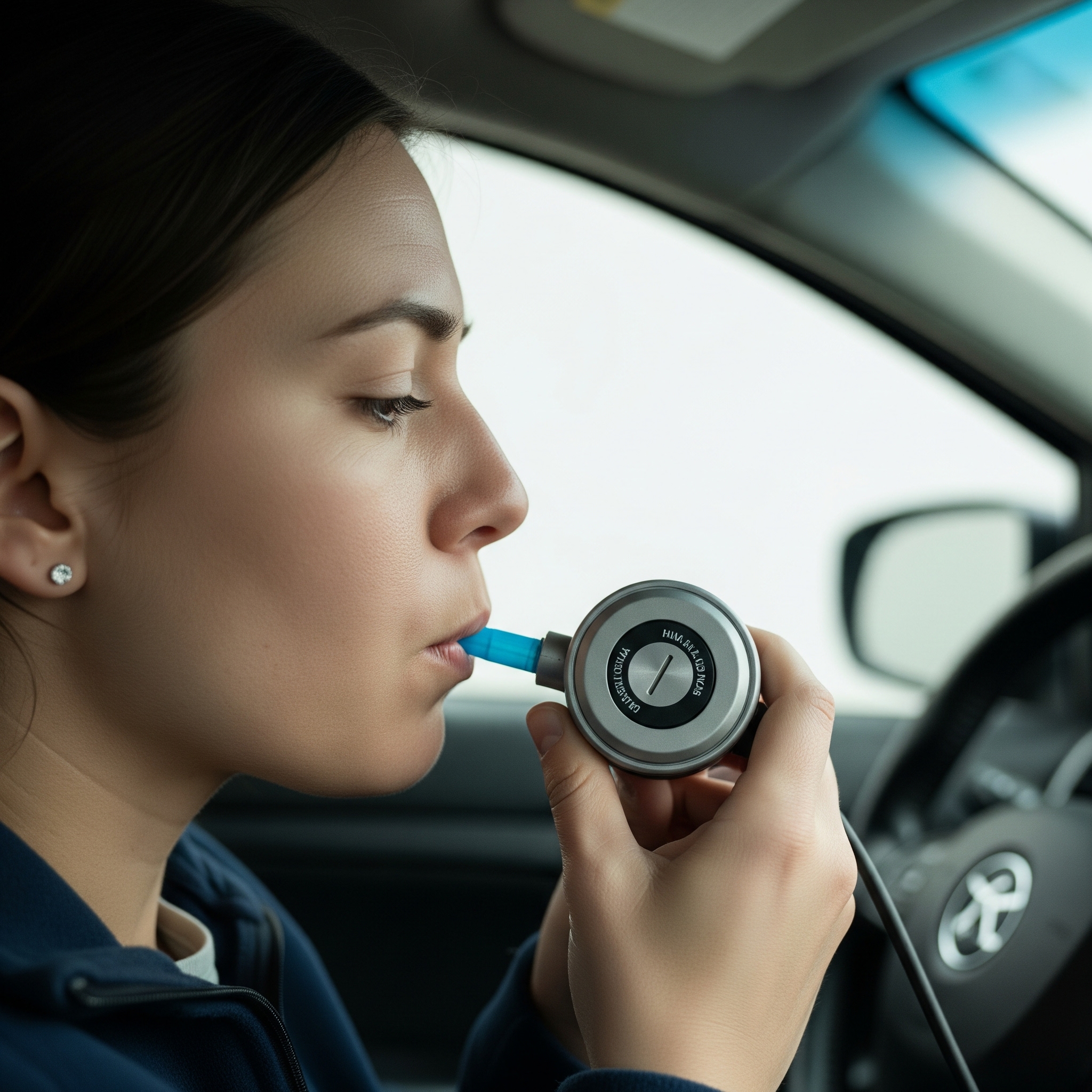
Starting August 1, 2025, Minnesota’s ignition interlock laws are changing drastically and drivers arrested or convicted of DWI need to take notice. New legislation passed in Chapter 29 of the 2025 Minnesota Session Laws introduces the most stringent ignition interlock regulations in state history.
For anyone facing a DWI in Minnesota, understanding these changes is critical. You could face significantly longer ignition interlock requirements, a mandatory treatment or rehabilitation program, and the possibility of lifetime participation in the program, plus gross misdemeanor charges for violations.
Let’s walk you through every key change in the 2025 ignition interlock law, how it compares to prior rules, who’s impacted, and what you need to do to protect your rights and driving privileges.
The ignition interlock device (IID) program in Minnesota allows DWI offenders to regain limited driving privileges by installing a breathalyzer-type device in their vehicle. The device prevents the engine from starting if it detects a blood alcohol concentration (BAC) of 0.02 or higher.
Under the previous laws, drivers used the ignition interlock program as a faster path to restoring driving privileges. However, the new 2025 updates significantly increase the required time in the program and introduce mandatory treatment for reinstatement.
Effective August 1, 2025, the ignition interlock program will:
These changes apply to both administrative license revocations and criminal convictions for DWI and criminal vehicular operation.
Previously, many ignition interlock participants could regain full driving privileges within 1–2 years. The new statute §171.178, subd. 8 imposes sharply extended timeframes based on the severity of the offense and the participant’s history:
| Offense Type | Prior DWIs | Injury Severity | Interlock Period |
| Standard DWI | 1 (in 20 years) | — | 2 years |
| Criminal Vehicular Operation | 0 | Bodily harm | 2 years |
| Criminal Vehicular Operation | 1 lifetime | Bodily harm | 5 years |
| Standard DWI | 2 lifetime | — | 6 years |
| Criminal Vehicular Operation | 0 | Great bodily harm | 6 years |
| Criminal Vehicular Operation | 0 | Death | 6 years |
| Criminal Vehicular Operation | 2 lifetime | Bodily harm | 8 years |
| Criminal Vehicular Operation | 1 lifetime | Great bodily harm | 8 years |
| Standard DWI | 3+ lifetime | — | 10 years |
| Criminal Vehicular Operation | 3+ lifetime | Bodily harm | 10 years |
| Criminal Vehicular Operation | 2+ lifetime | Great bodily harm | 10 years |
| Criminal Vehicular Operation | 1 lifetime | Death | 15 years |
| Criminal Vehicular Operation | 2+ lifetime | Death | Life |
This means if you’re convicted of DWI with priors and someone is injured or killed, you could be locked into the program for a decade or more—or indefinitely.
One of the most significant changes: No full license reinstatement without treatment if you have been charged with certain offenses.
To regain full driving privileges, all participants subject to the new law must:
The Minnesota Department of Public Safety (DPS) now has full authority to deny license reinstatement if you cannot provide proof of treatment.
This applies whether your revocation was due to:
If you’re involved in a DWI-related fatality and have two or more prior DWIs, Minnesota law now requires a lifetime of ignition interlock.
This means:
Now under Minn. Stat. §171.09, subdivision 1(g), it’s a gross misdemeanor to operate any vehicle without an ignition interlock if your license is restricted.
This includes:
Convictions carry serious penalties including jail, fines, and further license sanctions.
The revised law outlines escalating consequences for violations of ignition interlock terms under §171.306, subd. 5:
| Violation Count | Interlock Extension |
| 1st Violation | 180 days |
| 2nd Violation | 1 year |
| 3rd+ Violation | 545 days |
Violations include:
For repeated or serious misconduct, the DPS can terminate participation entirely. Terminated participants lose all creditfor time previously served.
If a participant who has already completed treatment registers a BAC of 0.02 or higher, the interlock period resets.
You must again show abstinence over a new, full interlock period. However, the law does allow half-credit for the time you previously completed if this is your first violation.
Repeat alcohol use, even unrelated to driving, can also trigger a reset. If you’re cited for public intoxication or alcohol-related disorderly conduct, DPS can extend your interlock period again.
The new ignition interlock law broadens the eligibility pool. Under §171.306, subd. 1(d), individuals convicted of the following offenses may now participate:
This is a substantial shift. Previously, many of these individuals were ineligible for limited licenses. Now, participation is encouraged, but the timeline for full reinstatement is long.
Minnesota law now counts qualified prior impaired driving incidents over the past 20 years instead of 10 years.
This significantly increases the number of people subject to:
Therefore, a prior DWI or license revocation due to an alleged DWI from 2006 can now impact your 2025 revocation period and interlock eligibility.
If DPS extends your revocation based on a violation of interlock program guidelines, you now have the right to a court hearing under Minn. Stat. §171.19.
This gives participants a small window to challenge revocation extensions tied to interlock violations.
You may operate a vehicle without an interlock only if:
Personal errands, off-the-clock driving, or using someone else’s vehicle for work purposes are not exempt. Violating this restriction can lead to both criminal charges and extended interlock time.
The ignition interlock program is not free. Participants typically pay:
Participants must also maintain high-risk insurance (SR-22 or non-cancelable coverage) and may face higher premiums for years.
Providers must offer discounted rates to indigent participants under Minn. Stat. §171.306, subd. 2.
A skilled Minnesota DWI defense attorney can:
Don’t try to face Minnesota’s new DWI laws alone. The consequences have never been higher.
Minnesota’s ignition interlock laws are no longer just a technical process—they are a high-stakes legal maze with serious consequences. Whether you’re facing a license revocation, considering treatment options, or worried about a violation resetting your progress, you need more than advice—you need an advocate.
At Kohlmeyer Hagen Law Office, we’ve helped hundreds of Minnesotans protect their rights and regain their driving privileges. Our DWI defense attorneys know the law, know the Department of Public Safety’s procedures, and know how to fight for the best outcome. From Mankato to Rochester and beyond, we’re the go-to firm for smart, aggressive, and effective DWI defense.
Don’t let one mistake define your future. Call us today for a free consultation, 507-625-5000. Let’s get you back on the road—legally, safely, and as quickly as possible.
As of August 1, 2025, all ignition interlock participants must complete licensed substance use treatment to qualify for full license reinstatement. Revocation and interlock periods are longer, and some offenders may face lifetime participation.
Anyone with a DWI conviction and one or more prior offenses in the past 20 years, or those involved in a crash causing injury or death, will likely need to use the device. Participation is also mandatory for test refusals and high-BAC results.
It’s now a gross misdemeanor to drive without the device if your license is restricted. This can lead to jail time, fines, and license extension or cancellation.
Depending on your history and offense, the required time ranges from 2 years to lifetime. For example, someone with two DWIs and a serious crash might need the device for 8–10 years or longer.
A BAC reading of 0.02 or above—even if you’re not driving drunk—resets your interlock timeline, and you’ll need to prove abstinence for the full term again (with half-credit for your previous participation if it’s a first-time violation).
Yes. As of 2025, you have the right to petition the court for judicial review of an ignition interlock-related extension. This allows you to dispute violations, challenge DPS findings, and potentially shorten or eliminate added time.
Yes. Under the 2025 rules, completion of a licensed substance use disorder treatment program is required for full reinstatement—even if you’ve successfully completed the interlock period.
Contact an experienced DWI attorney immediately. With strict deadlines and high stakes, professional legal help is essential to navigate the new system, protect your rights, and restore your ability to drive.




