By Jason Kohlmeyer, Family Law Attorney
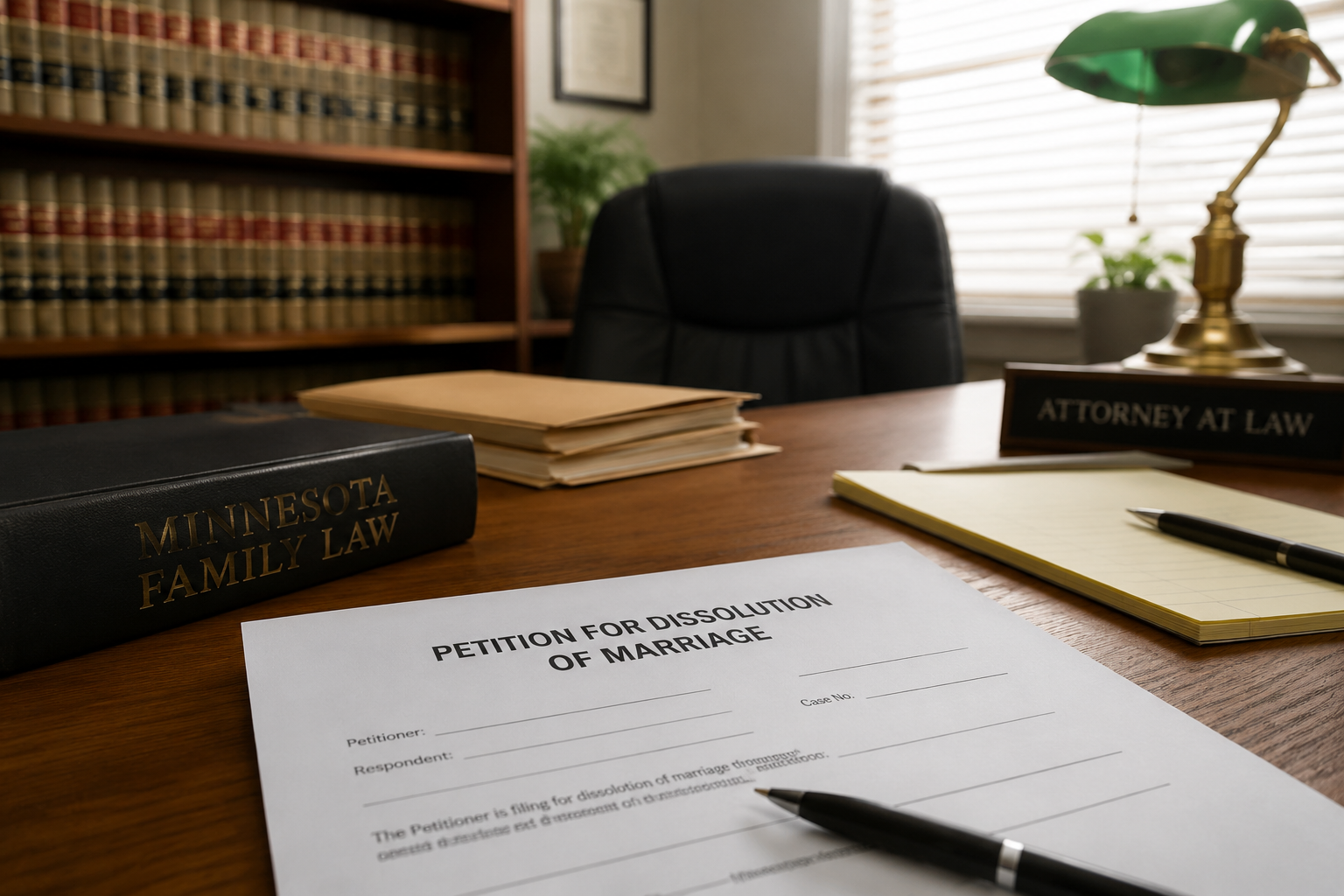
To start a divorce in Minnesota, one spouse files a Summons and Petition for Dissolution of Marriage with the district court in the county where either spouse lives. You or your spouse must have lived in Minnesota for at least 180 days first. After filing, you serve the papers on your spouse, who then has 30 days to answer. That is the whole on-ramp. Everything else in a divorce flows from these first steps.
I have practiced Minnesota family law for over 25 years, much of it in high-conflict, custody, and business divorce cases. The questions below are the ones clients actually ask me in that first meeting, when all they really want to know is how to begin.
You are eligible if you or your spouse has lived in Minnesota for at least 180 days before the case is filed. Military members stationed here for 180 days also qualify. This residency rule comes from Minnesota Statutes section 518.07. If neither of you has met the 180-day requirement yet, you wait until one of you does, or you file in the state where you currently live.
Minnesota is a no-fault state. You do not have to prove your spouse did anything wrong. Under section 518.06, the only ground is an irretrievable breakdown of the marriage. In plain terms, the marriage is over, and there is no reasonable hope of fixing it. Fault does not earn you a better property split or more parenting time, so the case stays focused on practical decisions.
Two documents start the case: the Petition and the Summons. One spouse prepares and files both.
The Petition is the document that asks the court to end the marriage. It identifies both spouses and any minor children. It states what you are asking for on custody, parenting time, child support, and spousal maintenance. It also lays out how you propose to divide property and debts. The Petition sets the table for the entire case, so the requests in it matter. In a farm or closely held business divorce, I spend real time here, because a sloppy first description of the assets can haunt you for the next year.
The Summons notifies your spouse that the case has begun and that they have 30 days to respond. It carries something many people miss. Under section 518.091, the Summons triggers automatic restraining provisions the moment it is served. Neither spouse may hide or dispose of assets, except for normal living expenses or to pay an attorney. Neither spouse may cancel or change insurance or beneficiaries. These rules bind both of you, including the spouse who filed.
You file in the district court of a county where you or your spouse resides. County choice is not a formality. It decides which judges hear your case and which court administration manages your schedule and hearings.
In southern Minnesota, this comes up often. Blue Earth County in Mankato sits in the Fifth Judicial District. Olmsted County in Rochester sits in the Third Judicial District. If you live in Mankato and your spouse has moved to Rochester, you can usually file in either county. That choice is worth a conversation, because the two counties run their calendars and early case conferences differently, and the practical pace of your case can shift depending on where it lands.
Filing alone does not put your spouse on notice. You have to serve the Summons and Petition the right way. Service usually means having another adult, often a process server or sheriff’s deputy, personally hand the papers to your spouse. You cannot serve the papers yourself.
Proper service matters because it starts your spouse’s 30-day clock and locks in the court’s authority over the case. Skipping a step here is one of the most common early mistakes I see, and it can cost you weeks. The Minnesota Judicial Branch divorce self-help center walks through the service options in detail.
Once served, your spouse has 30 days to file an Answer. The Answer responds to each request in the Petition. Your spouse can agree with some points, disagree with others, and propose a different outcome on custody, support, or property.
Many spouses also file a Counter-Petition. That is their own affirmative request for how the divorce should be resolved. This stage is where you learn whether your case is contested or uncontested, which shapes everything that comes next. If your spouse ignores the papers and the 30 days pass, the case can move forward by default, though the court still reviews the terms for fairness.
Yes, and it is the fastest way in. If you and your spouse agree on everything, including custody, parenting time, support, and the division of assets and debts, you can file a joint petition. There is no spouse to serve and no contested answer to wait on.
A joint petition only works when the agreement is genuine and complete. If one of you does not want the divorce, or you still disagree on real issues, a joint petition is off the table and the case proceeds the standard way. I tell clients not to force this option just to save time. A rushed agreement that misses a pension or a business interest is far more expensive to fix later.
Yes. Early in the case, either spouse can ask the court for temporary relief. This is a short-term order that holds things steady while the divorce is pending. It can set temporary custody and parenting time, temporary child support or spousal maintenance, who stays in the house, and who pays which bills.
Temporary relief exists because life does not pause when a divorce starts. These early orders often set the tone for the rest of the case, so they deserve attention rather than a quick handshake.
If you have minor children and you do not agree on custody and parenting time, yes. Under section 518.157, the court orders parents to complete a parent education program, generally at least eight hours. Participation usually must begin within 30 days of the first filing.
The program is not a hurdle meant to punish you. It covers how children experience divorce and how to reduce conflict between parents. If there is a history of domestic abuse, the court keeps the parents in separate sessions. You can also take the class voluntarily before anything is filed.
Minnesota law does not require one. People do file on their own. But the documents that start a divorce set requests and obligations that are hard to undo later, and the automatic restraining provisions carry real legal weight from day one.
A family law attorney makes sure the paperwork is right, the deadlines are met, and the early requests protect your position. That matters most when children, a farm, a business, or significant assets are involved. If you are weighing whether to file, a single consultation with a Minnesota family law attorney will usually tell you what your first move should be.
About the author: Jason Kohlmeyer is a Minnesota family law attorney with over 25 years of experience and a partner at Kohlmeyer Hagen Law Office in Mankato and Rochester. He has practiced family law exclusively since 2010 and has handled hundreds of Family Law cases across southern Minnesota. He is the author of The Divorce Survival Guide: Getting Divorced in Minnesota and has spoken on family law topics for the American Bar Association, Minn. State Bar associations, and American Trial Lawyers Association. He is a member of the Minnesota State Bar Association and has been recognized by Super Lawyers and Best Lawyers of America for many years.




